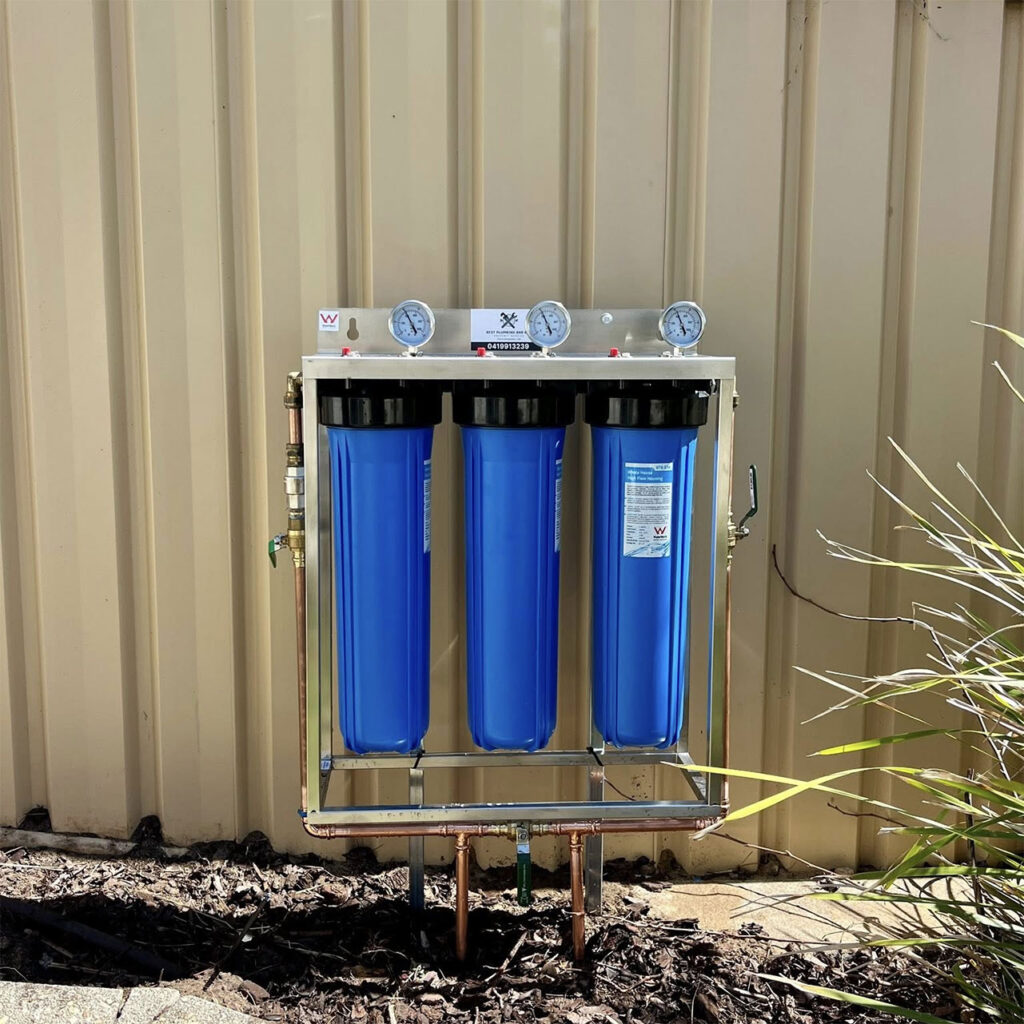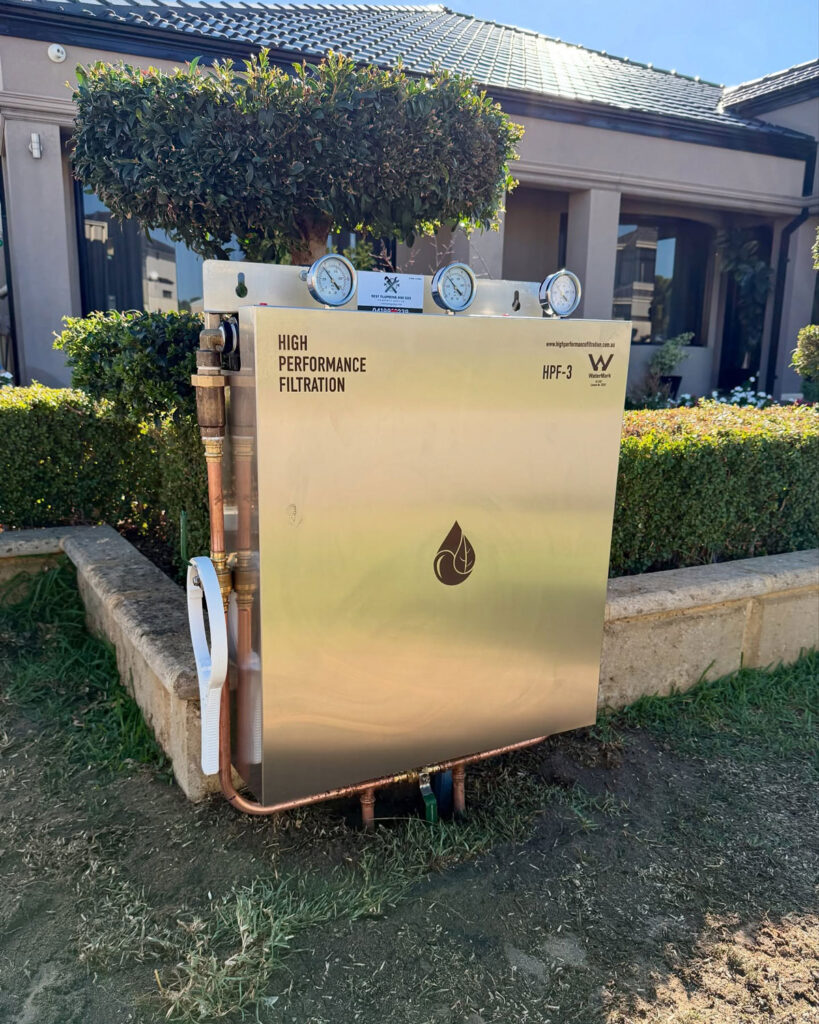
Perth drinking water quality is tested thousands of times per year and meets Australian Drinking Water Guidelines. That’s the reassuring headline. The more complete picture is that Perth tap water is also harder, more chlorinated, and more variable by suburb than most residents realise. This guide breaks down exactly what’s in Perth’s drinking water, what it means, and which filtration options address each concern.
Where Perth’s Drinking Water Comes From
Perth’s water supply comes from three sources, all managed by the Water Corporation:
- Surface dams in the Darling Range (Mundaring, Serpentine, Canning) — supply has declined significantly in recent decades
- Groundwater from the Gnangara and Jandakot mounds (high in calcium and magnesium, which is why Perth water is hard)
- Desalinated water from the Kwinana and Binningup plants — lower in minerals but slightly higher in sodium
The blend delivered to your household depends on where you live. Coastal and southern suburbs receive more desalinated water. Northern and inland suburbs tend to receive more groundwater. This matters because drinking water quality varies meaningfully across Perth suburbs.
What’s Actually in Perth Drinking Water
Chlorine and Chloramines
Chlorine is added to Perth drinking water as a disinfectant. It’s what gives tap water its characteristic smell and taste. At the tap, chlorine levels are typically 0.2 to 0.6 mg/L — safe, but noticeable. Some parts of the network use chloramines (chlorine combined with ammonia) as a more stable disinfectant. Both are safe at these levels but affect taste noticeably.
A carbon filter removes chlorine and chloramines effectively and is the simplest fix for taste and odour complaints.
Fluoride
Perth drinking water is fluoridated at approximately 0.6 to 0.8 mg/L, within the Australian Health guideline of 1.5 mg/L. Fluoride is added to support dental health. It’s tasteless and odourless at these concentrations.
If you prefer fluoride-free water for drinking, reverse osmosis is the only residential filtration method that reliably removes it (95%+ removal). Carbon filters do not remove fluoride.
Total Dissolved Solids (TDS)
TDS measures the total concentration of dissolved minerals in water — calcium, magnesium, sodium, bicarbonates, and others. Perth tap water typically ranges from 150 to 400 mg/L depending on your supply blend. The Australian guideline is 500 mg/L (aesthetic), with 1000 mg/L as the upper health limit.
Higher TDS doesn’t indicate unsafe water, but it correlates with harder water, more scale on appliances, and sometimes a mineral taste. A reverse osmosis system significantly reduces TDS.
Hardness
Perth water hardness varies by suburb and source. Groundwater-supplied areas can reach 200 to 300 mg/L of calcium carbonate — moderately hard. Desalinated water is softer. Hard water isn’t a health concern but causes scale buildup on taps, showerheads, and appliances, and affects how soap lathers.
Water filtration for hardness means either a water softener (ion exchange) or a whole house filter with a softening stage.
Lead and Heavy Metals
Lead is not a concern at the treatment plant level — it’s not added to Perth drinking water. However, homes built before 1990 may have plumbing with lead solder or lead-based fittings, which can leach trace lead into drinking water at the tap. If your home is older and you have young children, testing your tap water for lead is worthwhile.
Reverse osmosis removes lead and other heavy metals effectively.
Which Filtration Options Address Which Perth Water Concerns
- Chlorine taste and odour: carbon block or activated carbon inline filter
- Fluoride: reverse osmosis only (carbon does not remove fluoride)
- TDS reduction: reverse osmosis
- Hardness / scale: water softener or whole house system with softening
- Lead / heavy metals: reverse osmosis or lead-rated carbon filter
- Bacteria / microorganisms: UV treatment or reverse osmosis with UV stage
- Whole-home quality improvement: whole house multi-stage filtration system
Do You Need to Filter Perth Tap Water?
Strictly speaking, no — Perth drinking water is safe. But ‘safe’ and ‘optimal’ are different things. Most households who invest in water filtration in Perth do so for taste (chlorine), peace of mind (young children), specific health concerns (fluoride, heavy metals), or to protect their appliances from scale. All of those are valid reasons, and there’s a solution at each price point.