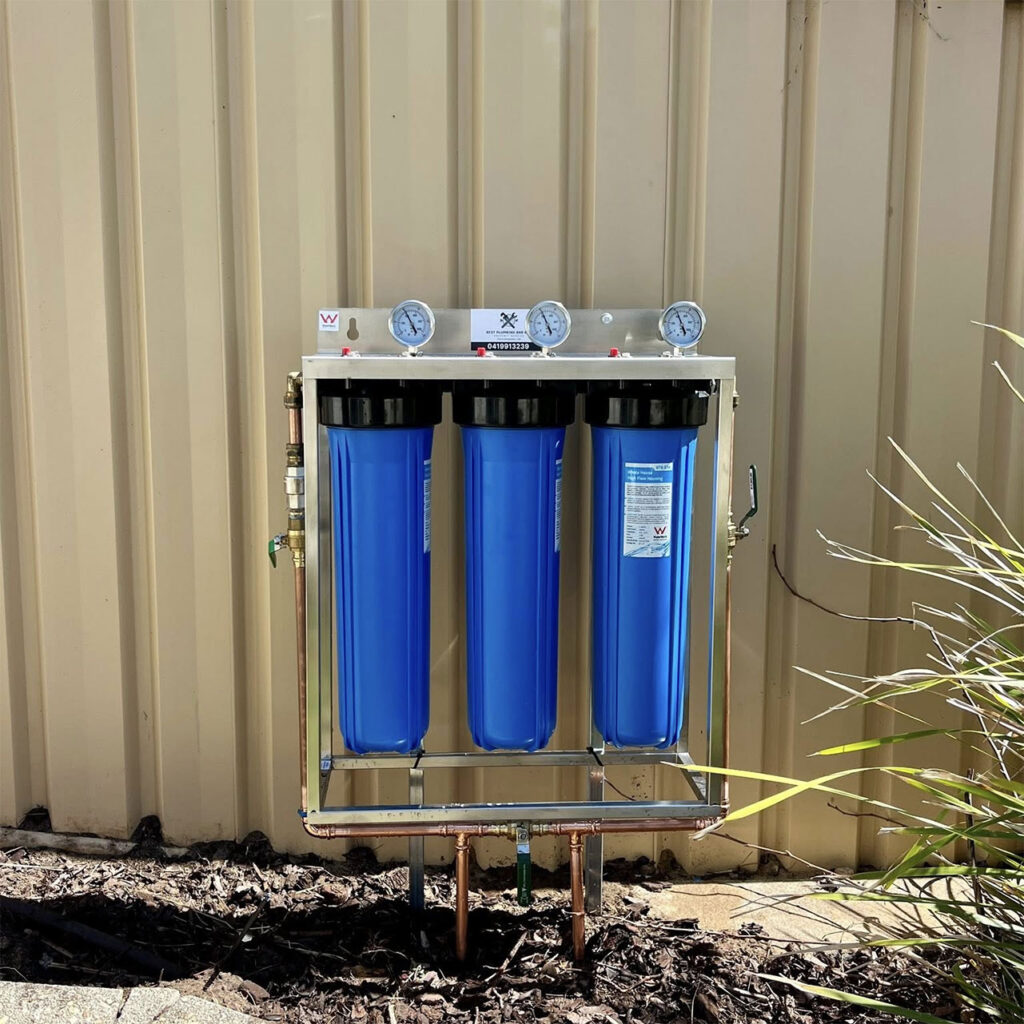
Reverse osmosis is the most thorough water filtration method available for Perth households. A reverse osmosis system in Perth removes up to 99% of dissolved contaminants from your tap water — not just sediment and chlorine, but heavy metals, fluoride, nitrates, sodium, microplastics, and pharmaceutical traces. If you’re serious about drinking water quality, this is the system to look at. But there are a few things worth knowing before you buy.
1. How Reverse Osmosis Actually Works
Water is pushed under pressure through a semi-permeable membrane with pores small enough to block dissolved contaminants. Most molecules — everything larger than a water molecule — can’t pass through and are flushed away as reject water. What comes through the membrane is stored in a small pressurised tank under the sink, then delivered via a dedicated filtered tap on your benchtop.
A standard reverse osmosis Perth system has 3 to 5 stages: a sediment pre-filter, one or two carbon pre-filters, the RO membrane itself, and a carbon post-filter to polish taste. Some systems add a remineralisation stage to add back beneficial minerals.
2. What Reverse Osmosis Removes From Perth Water
This is where RO stands apart from standard carbon filters:
- Chlorine and chloramines (taste and odour)
- Fluoride (up to 95% removal)
- Heavy metals — lead, arsenic, cadmium, mercury
- Nitrates and nitrites (relevant for bore-adjacent households)
- Sodium (relevant if you’re on desalinated water)
- Microplastics and particulates
- Bacteria and some viruses (membrane + UV stage)
- TDS (total dissolved solids) — significantly reduces overall mineral load
3. What Reverse Osmosis Does NOT Remove
RO is extremely effective, but not a complete solution for all contaminants. It does not reliably remove dissolved gases (like CO2), some volatile organic compounds (VOCs), or chlorine that has already converted to gas form. This is why a quality carbon post-filter stage is important. If you have specific contaminant concerns, we can test your water and advise.
4. The Flow Rate Is Slower Than a Standard Tap
Reverse osmosis systems filter water slowly — typically 1 to 4 litres per hour depending on the membrane. This is why they use a storage tank: the tank fills gradually when you’re not using water, so when you open the filtered tap, the water flows normally from the tank rather than direct from the membrane. Tank size is typically 8 to 12 litres for an under-sink residential system.
5. RO Systems Produce Reject Water
For every litre of filtered water produced, a reverse osmosis system typically flushes 2 to 4 litres of reject water down the drain (older membranes can be worse). Modern high-efficiency membranes have improved this ratio significantly. The reject water can be redirected to garden use with the right setup.
6. What Reverse Osmosis Installation Involves in Perth
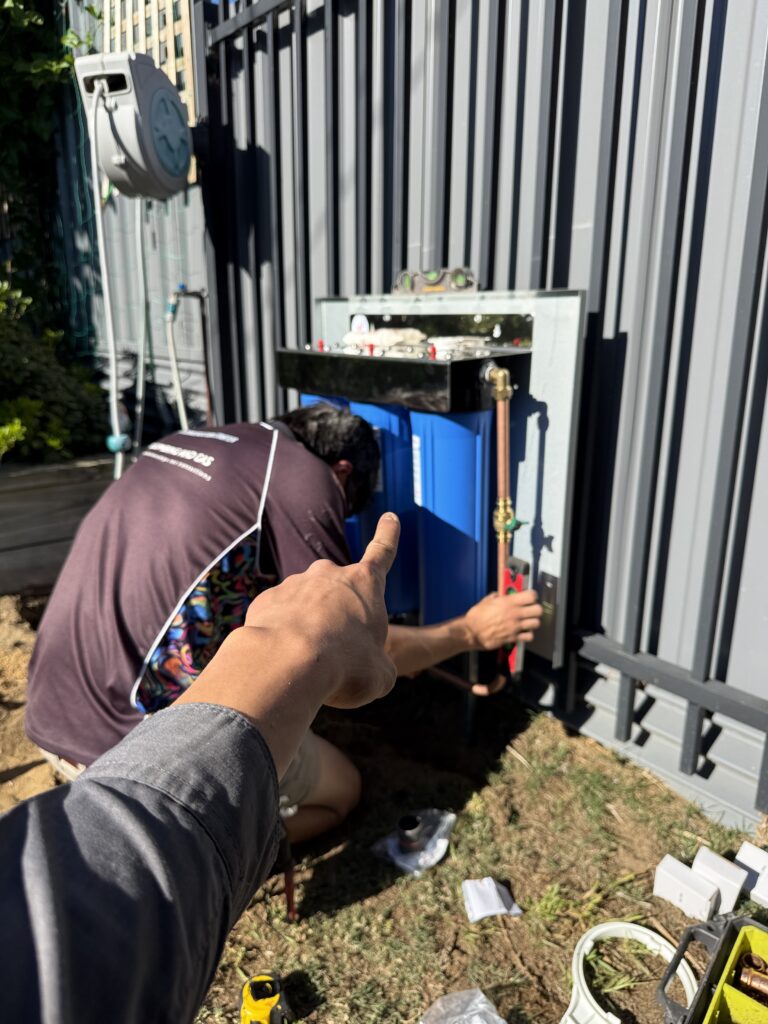
A licensed plumber mounts the system inside the under-sink cabinet, connects it to the cold water supply line, installs the storage tank, and fits a dedicated filtered water tap through the benchtop or sink. The waste line connects to the sink drain. Total installation time is usually 2 to 3 hours. Benchtop drilling is required unless you have an existing tap hole.
Installed cost for a quality reverse osmosis system in Perth: $700 to $1,200 depending on the brand and number of stages. Filter replacement runs $150 to $300 per year. Membranes last 2 to 3 years.
7. Is Reverse Osmosis Worth It for a Perth Household?
For most Perth households, a quality under-sink carbon filter handles the main complaints (chlorine taste, odour). Reverse osmosis makes the most sense when:
- You have young children or immune-compromised household members
- You want fluoride removal
- You’re in a suburb with higher TDS or have tested your water and found elevated contaminants
- You’re on bore water and need drinking water treated separately from your irrigation supply
- You currently spend money on bottled water and want to stop
If you’re not sure whether RO is the right fit, we can test your water and help you decide before you spend money on a system you may not need.