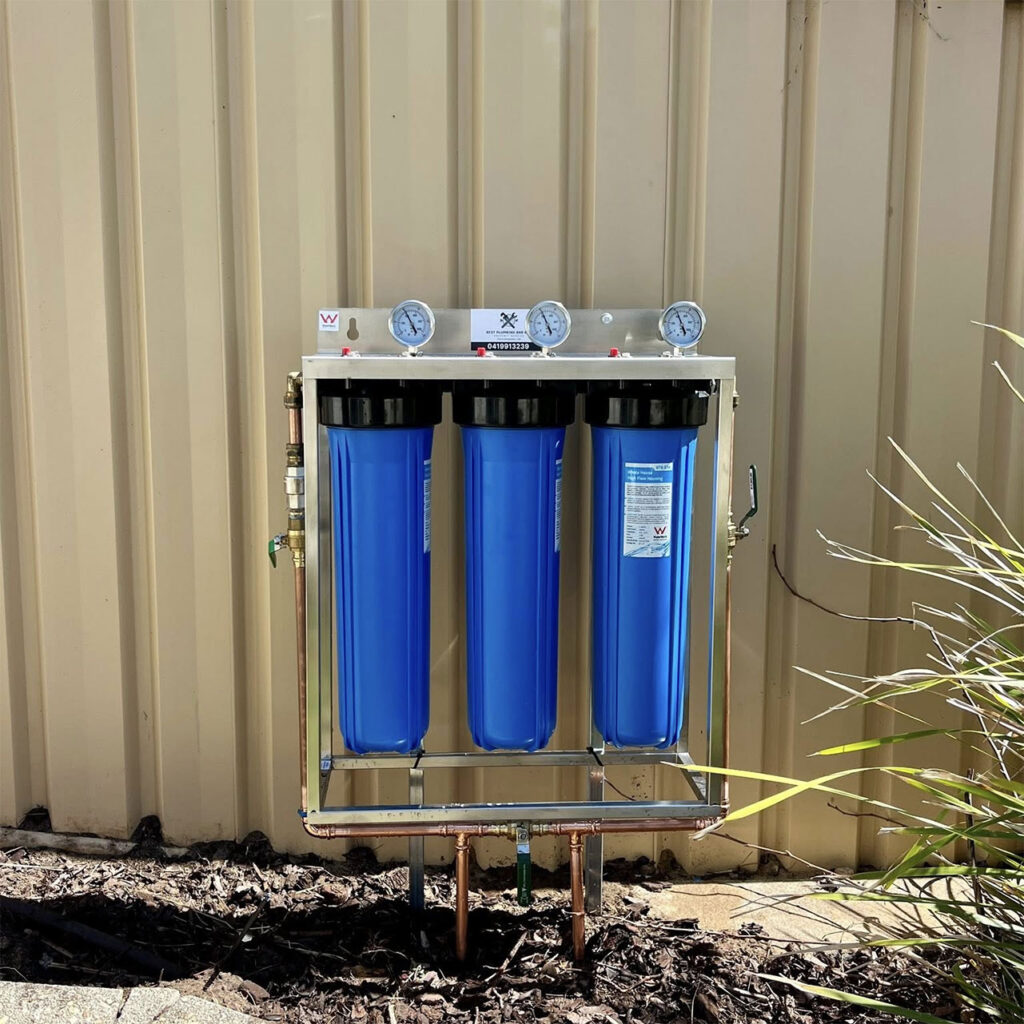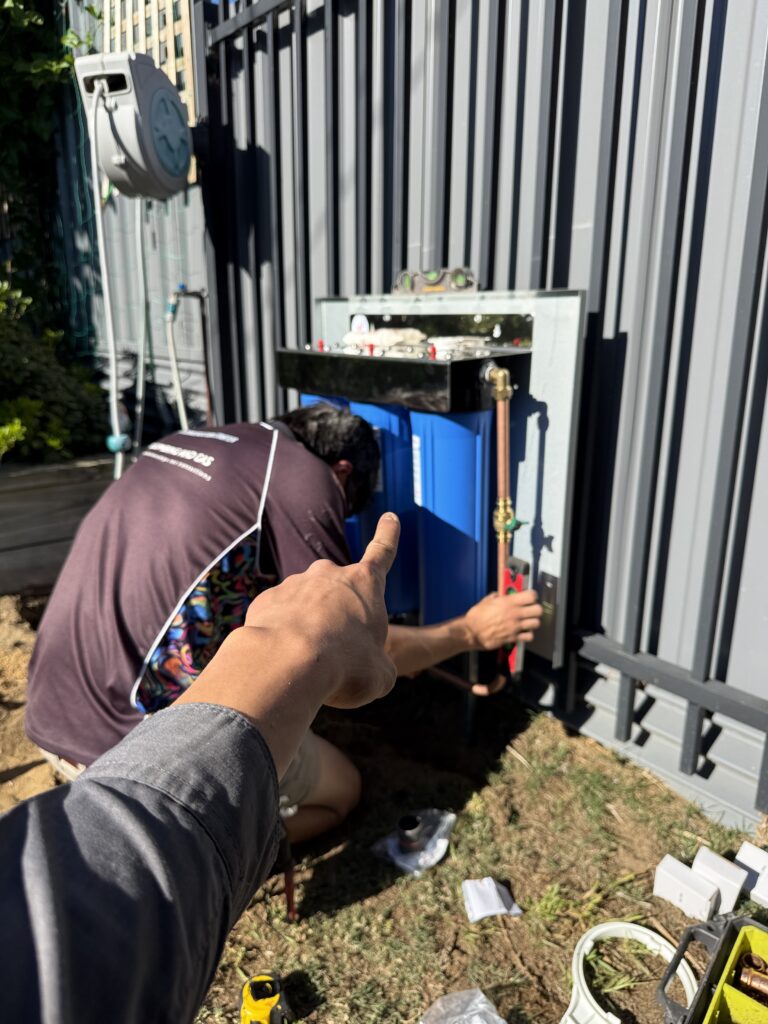
Bore water treatment in Perth is one of the more specialised areas of residential water filtration. Perth has a high density of residential bores — particularly in northern and eastern suburbs where Water Corporation mains pressure is lower and garden irrigation costs are significant. Untreated bore water stains driveways, kills plants with iron toxicity, clogs irrigation emitters, and in some areas carries bacterial contamination. This guide explains what’s typically in Perth bore water, what treatment involves, and what it costs.
What’s in Perth Bore Water?
Perth bore water is drawn from the superficial aquifer beneath the Swan Coastal Plain. Its composition varies by location but commonly includes:
- Iron and manganese: the most common bore water problems in Perth. Iron causes orange-red staining on paths, walls, and plants. Manganese causes black-brown staining. Both clog irrigation emitters over time.
- High pH: Perth bore water is often alkaline (pH 7.5 to 8.5+), which affects plant nutrition, particularly iron uptake in acidic-preferring plants.
- Bacteria: coliform bacteria and other microorganisms are present in some Perth bores, particularly shallower ones and those near septic systems.
- High TDS: bore water can have significantly higher dissolved solids than mains water.
- Hydrogen sulphide (rotten egg smell): present in some Perth bores, particularly in the southern suburbs.
Bore Water Treatment Options in Perth
Iron and Manganese Filtration
The most common bore water treatment required in Perth. An iron filter (oxidation and filtration system) oxidises dissolved iron and manganese into solid particles, then filters them out. Systems are rated by flow rate and iron concentration — a licensed plumber will test your bore water to specify the right system.
For very high iron concentrations, a chemical dosing system (potassium permanganate or chlorine injection) may be required ahead of the filter media.
pH Correction
If your bore water is highly alkaline, a pH correction stage (typically a calcite or dolomite contact tank) adjusts the pH before the water reaches your irrigation system or taps. This also protects copper and brass fittings from pH-related corrosion.
UV Disinfection
UV disinfection is used when bore water contains or is suspected of containing bacteria or other microorganisms. A UV chamber exposes water to ultraviolet light, which deactivates bacteria, viruses, and protozoa without adding chemicals. It’s typically installed as a final stage after particulate filtration.
Sediment Pre-Filtration
All bore water treatment systems start with a sediment filter to remove sand, silt, and larger particulates. This protects the downstream treatment stages from premature clogging.
Does Bore Water Treatment Make Bore Water Drinkable?
A well-specified bore water treatment system can make bore water safe for drinking — but this requires a full assessment of your bore water quality, a multi-stage system including iron filtration, pH correction, and UV disinfection, and regular testing and maintenance.
Most Perth homeowners use treated bore water for garden irrigation and outdoor taps only, and rely on mains water for drinking and cooking. This is a practical and cost-effective approach.
What Does Bore Water Treatment Cost in Perth?
Bore water treatment system costs in Perth depend on the level of treatment required:
- Basic iron filtration system: $800 to $1,500 installed
- Multi-stage system (iron + pH + UV): $2,000 to $4,000 installed
- Chemical dosing systems for high iron: add $500 to $1,500
- Annual servicing and media replacement: $200 to $500
Before installation, bore water should be tested by a laboratory or assessed on-site. This determines the correct system sizing and which treatment stages are needed.
Signs Your Perth Bore Water Needs Treatment
- Orange or red staining on concrete, garden edges, or walls
- Brown or black staining on surfaces
- Clogged irrigation emitters or sprinkler heads
- Rotten egg smell when bore pump runs
- Dead or yellowing plants despite regular watering (iron toxicity)
- Slimy orange deposits in bore riser pipe or pump housing