A whole house water filter in Perth does something an under-sink filter can’t — it treats every water outlet in your home. Every tap, every shower, every appliance, every toilet. For households dealing with chlorine smell in the shower, sediment in the hot water system, or wanting consistent filtered water across the whole property, a whole house water filter is the solution worth considering. Here’s what it involves and whether it makes sense for your situation.
What a Whole House Water Filter Does
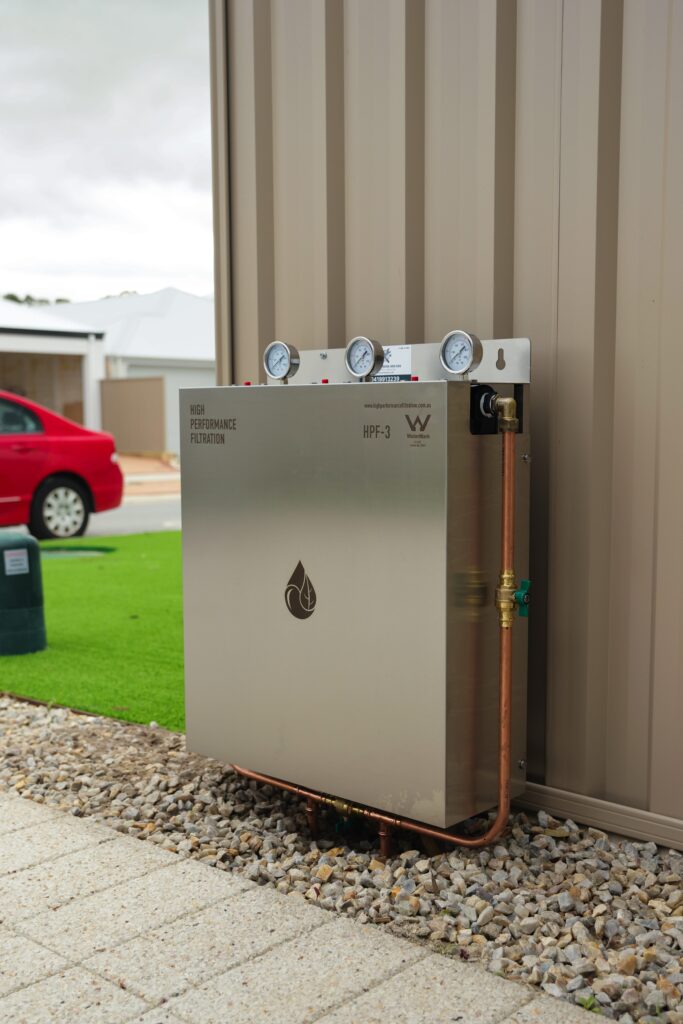
A whole house water filter (also called a point-of-entry filter) is installed at the mains water entry point to your home. All water entering the property passes through the system before reaching any outlet. This is in contrast to under-sink or benchtop filters, which only treat water at that specific tap.
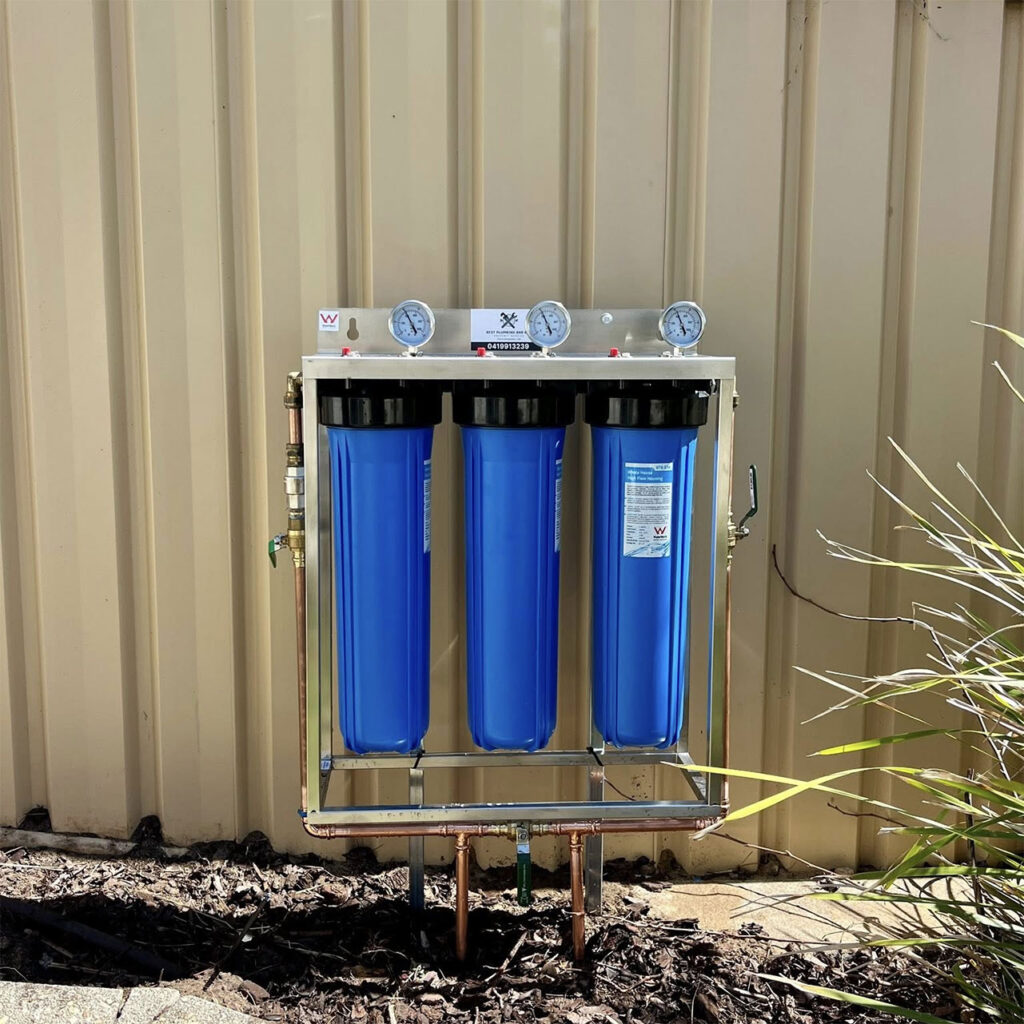
A typical whole house water filtration system in Perth uses 2 to 3 filter stages:
- Stage 1 — Sediment filter: removes sand, silt, rust particles, and particulates. Protects downstream filter stages and appliances.
- Stage 2 — Carbon filter: removes chlorine, chloramines, taste, and odour. The main reason Perth households install whole house filters.
- Stage 3 (optional) — Secondary carbon or specialised media: additional treatment for specific concerns like scale reduction or specific contaminants.
Some whole house systems add a UV disinfection stage for microbiological protection, particularly relevant for households with roof-collected rainwater or bore water.
Why Perth Households Specifically Benefit From Whole House Filtration
Perth water treatment relies on chlorine and chloramines as disinfectants — which means by the time water reaches your home, there’s enough residual chlorine to smell in the shower and taste at the tap. For households where this is a daily irritant, treating just the kitchen tap with an under-sink filter only solves half the problem.
A whole house water filter in Perth also protects your hot water system, dishwasher, washing machine, and other appliances from the sediment and particulates that accumulate in the distribution network. Sediment buildup is a common contributor to hot water system failure and reduced appliance efficiency.
Whole House Water Filter vs Under-Sink Filter: Which Do You Need?
Under-sink filter is the better choice when:
- Your main concern is drinking and cooking water quality
- You want to minimise cost and installation complexity
- You’re renting or want a lower-commitment solution
Whole house water filter is the better choice when:
- You want filtered water at every outlet (showers, baths, laundry)
- You’re concerned about appliance protection and sediment
- Chlorine smell in the shower is a specific complaint
- You have skin or hair sensitivity to chlorinated water
- You’re on a property with older pipes that may contribute sediment
What Does Whole House Water Filter Installation Cost in Perth?
Whole house water filter system costs in Perth (installed, 2025):
- 2-stage system (sediment + carbon): $600 to $1,200
- 3-stage system: $900 to $1,800
- 3-stage with UV: $1,500 to $2,500
- Premium high-flow systems for larger homes: $2,000 to $3,500+
Filter replacement: $150 to $400 per year depending on water usage and system size. Sediment filters need replacing every 3 to 6 months; carbon filters every 6 to 12 months. High sediment load in Perth groundwater blends can reduce filter life.
What Does Whole House Filter Installation Involve?
A licensed plumber locates the mains water entry point, installs a bypass valve, mounts the filter housing (wall-mounted or on a bracket), and connects it to the incoming water line. Flow rate matters — an undersized system creates pressure drop across the whole house. We size systems to your property’s water demand. Installation typically takes 2 to 4 hours.
Is a Whole House Water Filter Worth It in Perth?
For households where chlorine smell in the shower is a daily irritant, where appliance protection is a priority, or where filtered water at every outlet matters — yes. The cost per litre of filtered water is a fraction of bottled water, and the system protects appliances worth thousands of dollars.
For households where the main concern is just drinking water quality, an under-sink filter or reverse osmosis system is more cost-effective and easier to maintain.